Light Seen / Pass 12
The twelfth pass falls under the Dream Moon. In the Codex its sign is OM: a sound that moves through three parts and returns to silence.
The light
The reflection says that human breath, when phase-locked in a pattern such as 13-8-13-8, can entrain with light fields. This pass weighs that claim and then turns to what is known about light inside a living person, which is a good deal.
The texts
The idea of a light within is one of the most widely shared in human thought. In the Brihadaranyaka Upanishad a king asks a sage what serves a person for light. The Sun, comes the answer. And when the Sun has set? The Moon. And when the Moon has set? Fire. And when the fire is out? Speech. And when all is silent? The self is then one's light. In the early Buddhist discourses there is a short saying that the mind is luminous, and is clouded by what comes to it from outside. The Gospel of John speaks of a light that shines in the darkness. The Society of Friends, the Quakers, built a way of worship on waiting in silence for an inward light.
None of these is a statement about photons. They are beyond test, and they are among the most considered things human beings have said.
What is known
The eye is astonishingly sensitive. An experiment of 2016 showed that a person in the dark can sometimes detect a single photon.
Light also sets the body's clock. Besides the cells for seeing, the retina holds a small set of cells, identified in 2002, that respond to blue light and report not to the seeing brain but to the clock that times sleep, waking, hormones and body heat. Morning light sets that clock earlier; bright light late at night pushes it later. The 2017 Nobel Prize in medicine was given for the workings of that clock.
Light affects mood. Bright light in the morning is an established treatment for the winter form of depression, though it is not a cure for all low moods. Blue light has been used since the 1950s to clear jaundice in newborn babies. Sunlight on the skin makes vitamin D.
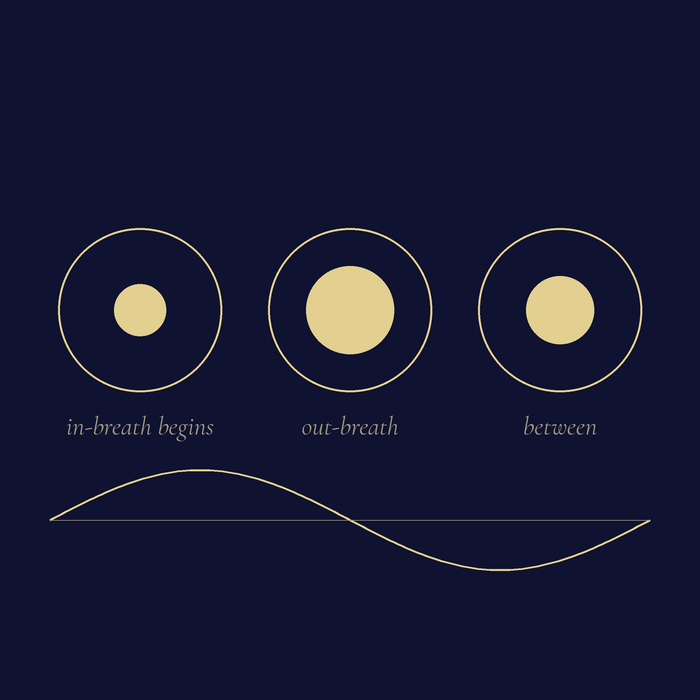
Light and breath meet in the body in at least three ways. Bright light makes about one person in four sneeze. In 2025 a team at the Karolinska Institute showed, in five experiments with about two hundred people, that the pupil of the eye changes with the breath: it is smallest as the in-breath begins and widest during the out-breath. They suggest that sight may lean toward fine detail on the in-breath and toward faint things on the out-breath. And slow, easy breathing, around six breaths a minute, steadies the rhythm of the heart, which is well shown.
The claimed pattern
Thirteen and eight are neighbours in the Fibonacci series, and their ratio is close to the golden number. That is arithmetic and it is true. As a breath pattern, 13-8-13-8 means a thirteen-count in-breath, an eight-count hold, a thirteen-count out-breath and an eight-count hold. That is a cycle of over forty seconds with sixteen counts held. There is no evidence that it, or any pattern, "entrains with light fields". Long holds can cause dizziness and are unwise for many people. This study does not recommend it. The practice below keeps to the same family of numbers, five, eight and thirteen, and drops the holds.
What is seen
The outer world, by light.
What is unseen
That light is also telling the body what time it is. That the pupil breathes. And that in dreams we see a lit world with our eyes closed, in the dark, with no light entering at all.
The geometry beneath
The circle of the pupil, opening and closing; and the circle of the day, which the body follows by light.
| Claim or reading | Grade | What the evidence shows |
|---|---|---|
| The eye can detect a single photon | established | Tinsley and others, 2016 |
| Light sets the body's daily clock | established | Retinal clock cells, 2002; Nobel Prize, 2017 |
| Morning bright light treats winter depression | established | Clinical trials since the 1980s |
| Pupil size follows the breath | established, recently | Schaefer and others, 2025 |
| A 13-8-13-8 breath entrains with light fields | not supported | No evidence; long holds are not advised |
| The mind is luminous by nature | beyond test | Held in several traditions |
| We see light in dreams with no light entering | established as experience | The brain makes the seen world |
Near-truths
- The breath does not tune itself to light fields. But it does move the pupil, the opening through which all seen light must pass. Each breath changes, very slightly, how the world is lit for us.
- The inner light of the traditions is not the faint glow of Pass 8, and it would be a mistake to offer one as proof of the other.
- The plainest light practice is also the best supported: see the morning, and dim the night.
Sit comfortably with eyes closed.
Breathe in gently to a slow count of five, and out to a slow count of eight. Do not hold at either end.
After thirteen breaths, stop counting and let the breath go its own way.
Notice the faint light behind the eyelids.
Rest, and breathe normally.